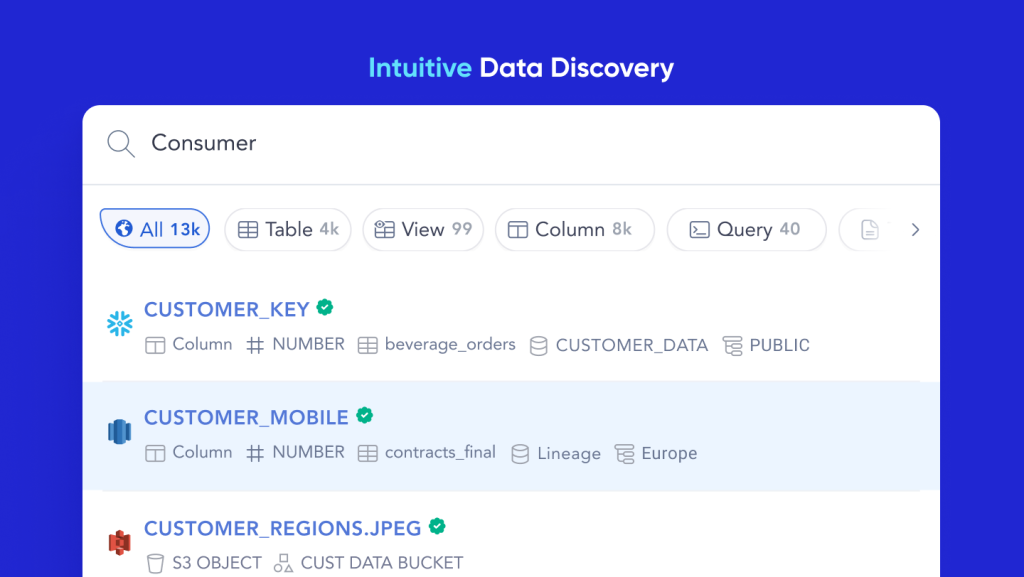
Active Metadata: Metadata isn’t just static – it’s dynamic, continuously updated, and actionable. This ensures teams always have the most up-to-date insights at their fingertips, streamlining decision-making and improving productivity.
Automations: Features like auto-documentation and Playbooks provide significant efficiency gains by reducing repetitive tasks and ensuring consistency. While these tools are highly effective, some users are eager to see even more powerful automation options in the future, highlighting Atlan’s potential for continued innovation.
Personalization: Atlan truly stands out with its ability to offer customized homepages and curated asset views. This makes the platform feel highly personal and relevant, catering to the specific needs of different user roles, whether they’re engineers, analysts, or business stakeholders.
End-to-End Lineage: The platform excels at providing robust, highly visual data lineage, making it easy to trace and understand data flows across complex ecosystems like Snowflake, dbt, Tableau, Salesforce, and Fivetran. This transparency is critical for both troubleshooting and compliance.
Business Glossary: Atlan supports organizational alignment with its centralized and linkable business glossary. Every definition is assigned ownership, ensuring accountability and clarity across teams, which is essential for effective communication.
Open by Default: Built on open APIs, Atlan avoids vendor lock-in, offering flexibility and interoperability with a wide range of tools and platforms. This open approach empowers teams to integrate seamlessly into their existing workflows.
Rapid Feature Delivery: Atlan takes customer feedback seriously, delivering new features and improvements at an impressive pace. Many updates and enhancements are rolled out within weeks, reflecting the company’s commitment to staying agile and customer-focused.
With these features, Atlan provides a powerful, user-centric platform that fosters collaboration, streamlines workflows, and adapts to meet the evolving needs of modern data teams.
Challenges: The platform presents many capabilities, but its complexity demands extensive initial configuration and governance planning, together with long-term commitment, to unlock its full potential. Teams who are unfamiliar with complex systems often find the learning curve steep. Additionally, the platform releases new features regularly but they often launch with small bugs which need immediate fixes and temporarily affect user experience and demand swift adjustments.
Verdict:
Pro: Feature-rich with cutting-edge capabilities that provide users with a wide range of advanced tools and functionality, making it suitable for both beginners and professionals.
Con: The full setup process can be resource-intensive, requiring time and effort to optimize, and minor bugs may still appear following new releases, which could impact the overall experience temporarily.